Radiolaria
Architecture of Exchange
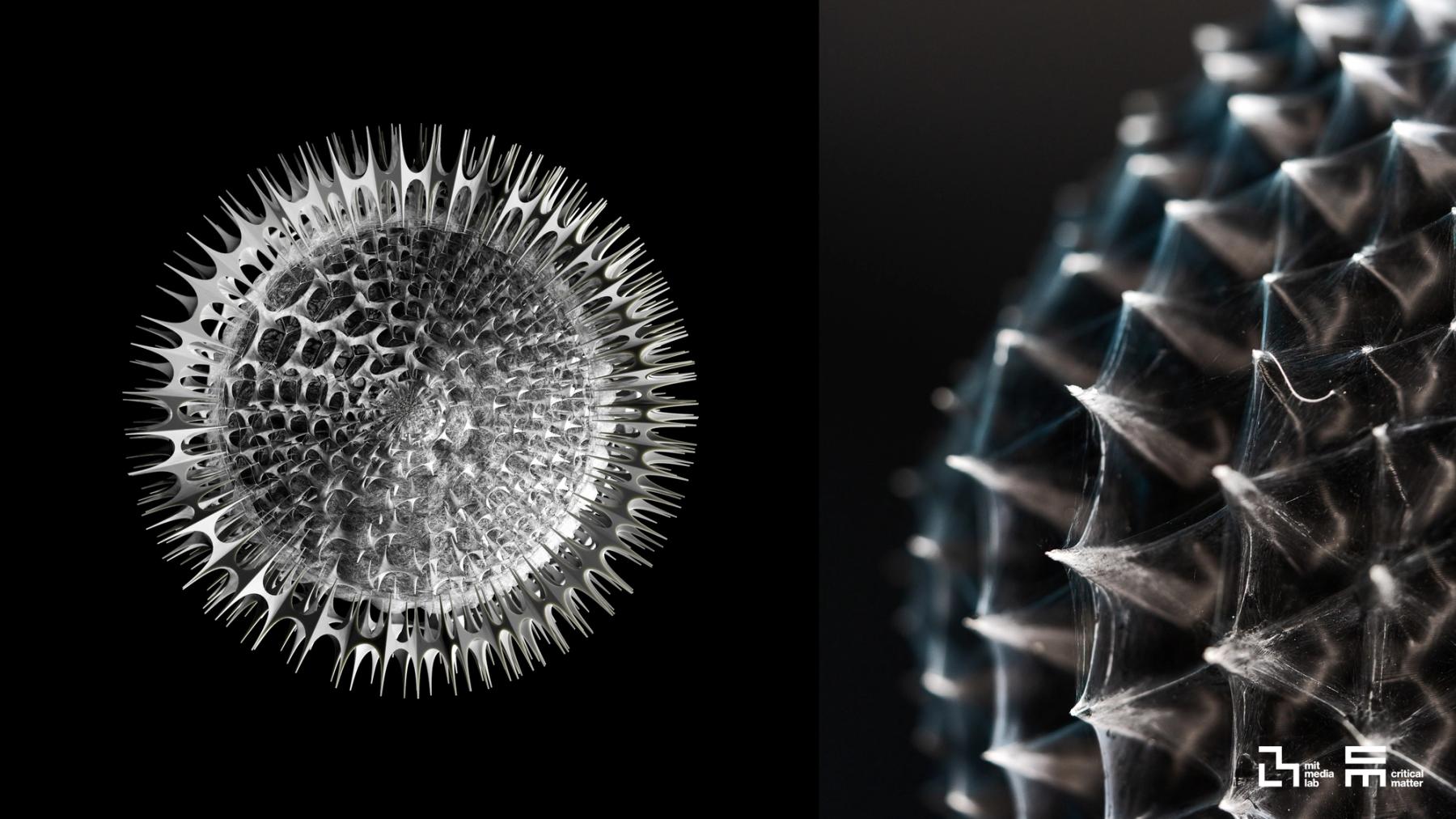
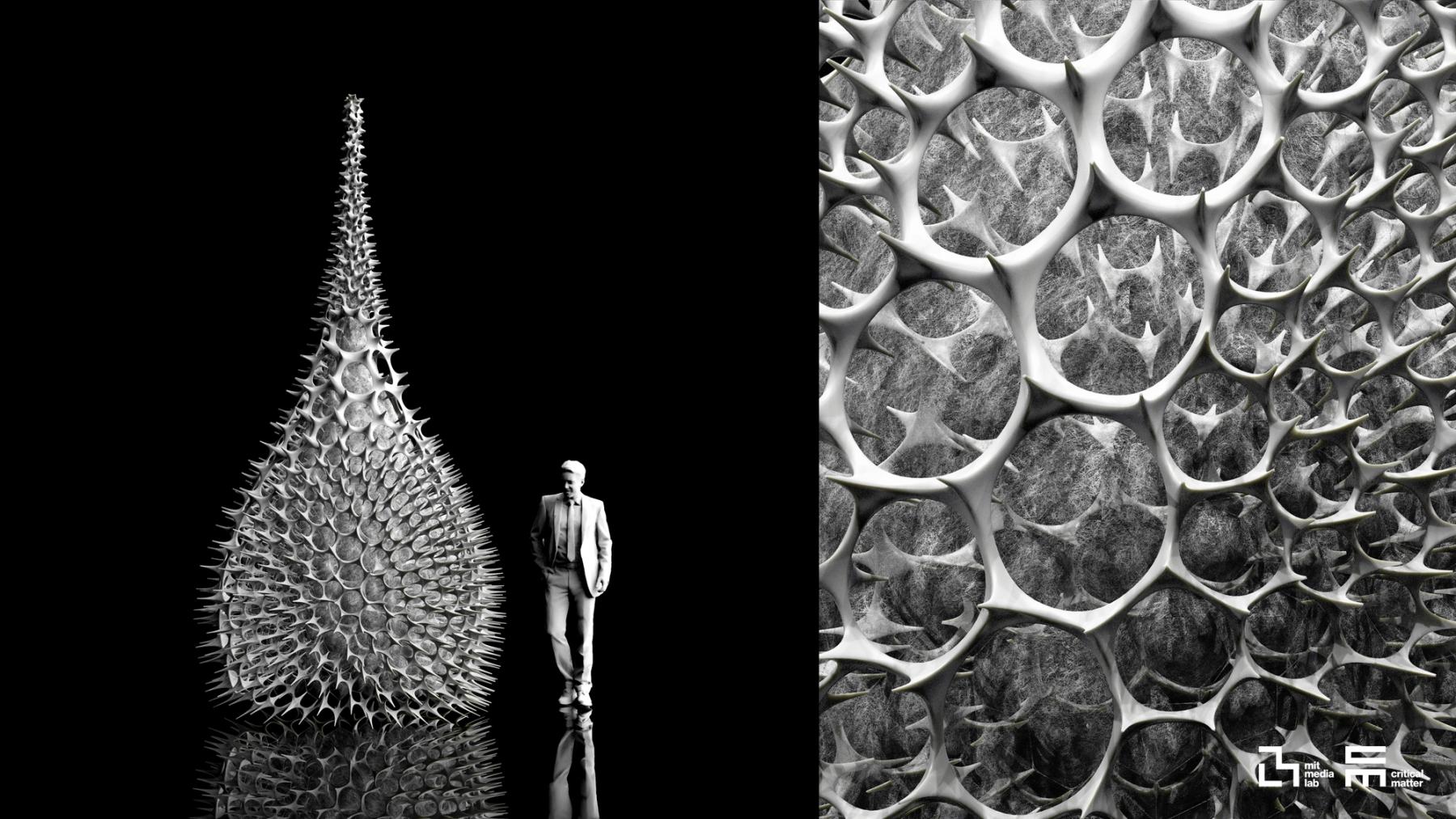
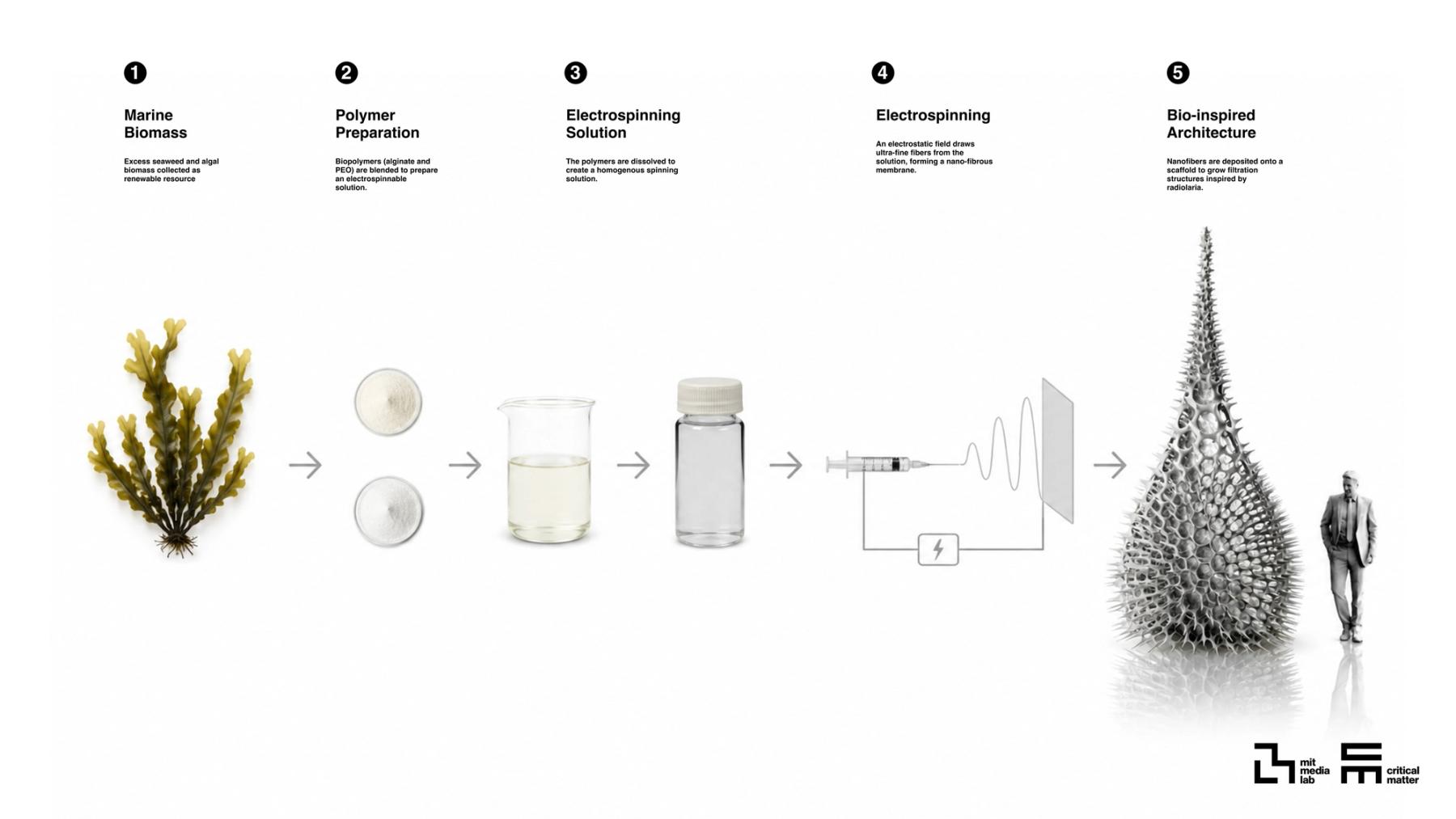
Can architecture be grown from ecological waste and become an active participant in environmental regeneration? This project reimagines the built environment as a living interface that filters, exchanges, and responds to its surroundings. By transforming excess seaweed into high-performance nanofibrous materials through electrospinning, and drawing inspiration from the porous structures of marine radiolaria, the research explores how biology, advanced fabrication, and architecture can converge to create regenerative material systems.
- Project Lead
Behnaz Farahi, MIT
- Research Team
Sergio Mutis, MIT
Justin Wang, MIT
Avantika Velho, MIT
Yuxiang Cheng, MIT- Research Areas
Material Intelligence
Sustainable Design
Bio-inspired Design
Advanced Robotic Fabrication
Electrospinning Architecture
- Links
Electrospun Fields: Overview (opens in new tab)
Electrospun Fields: 3D Nano-Fiber Material Computation as Design Method (opens in new tab)
As air pollution and declining environmental quality become pressing global challenges, the built environment has an opportunity to move beyond passive enclosure and actively contribute to ecological regeneration. At the same time, the increasing accumulation of seaweed and algal blooms is both a symptom of ecological imbalance and an overlooked material resource. Rather than treating this biomass as waste, the project investigates how it can become the foundation for regenerative architectural systems.
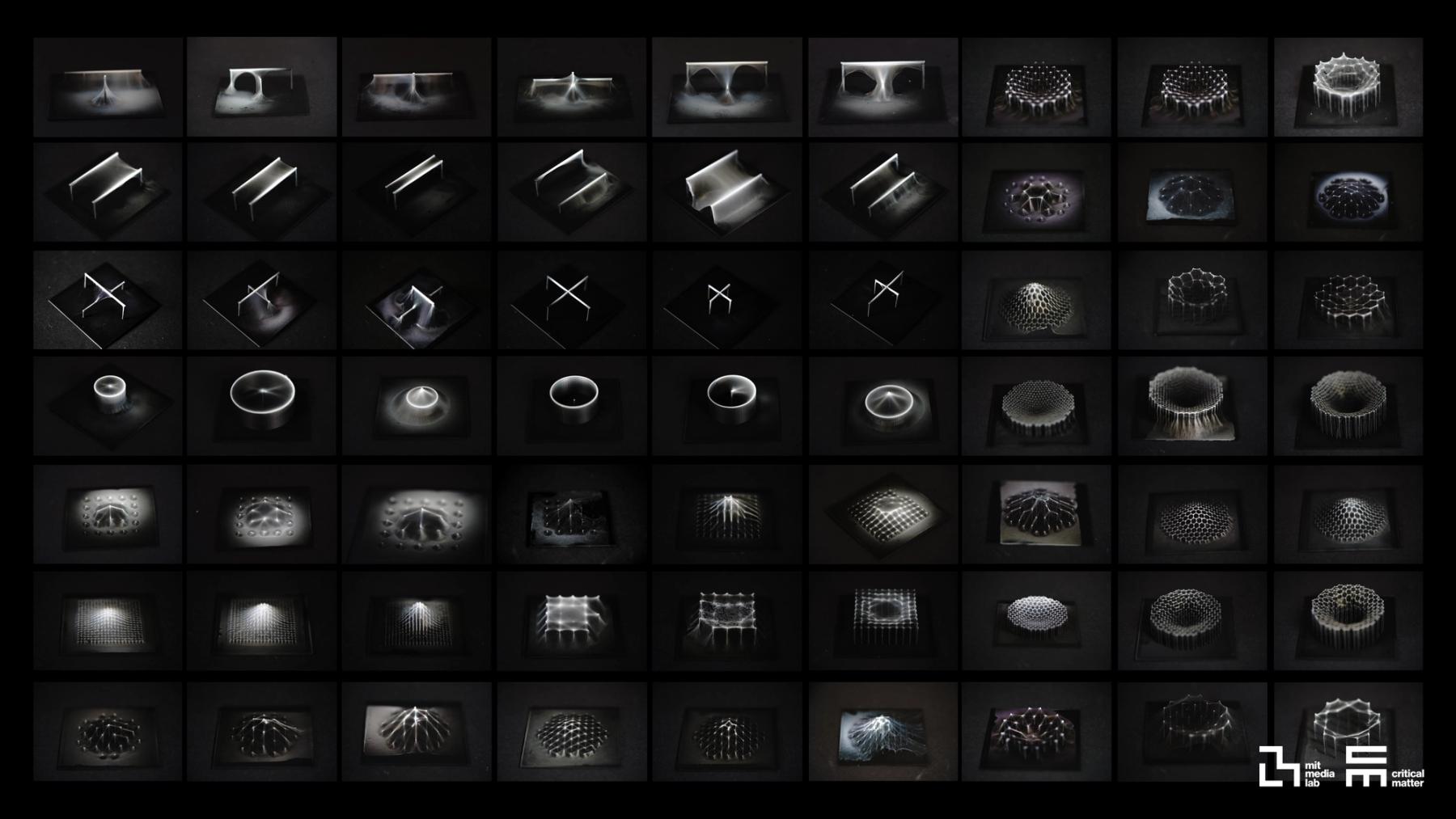
Using electrospinning, seaweed-derived biopolymers are transformed into ultrafine fibrous membranes with exceptionally high surface area and controlled porosity. While electrospinning is typically understood as a manufacturing technique, we investigate it as an architectural medium, using invisible electrostatic fields to grow porous structures whose morphology emerges from the interaction between material and force. These nanofibrous systems enable architecture to actively filter air and support continuous exchange with its environment.
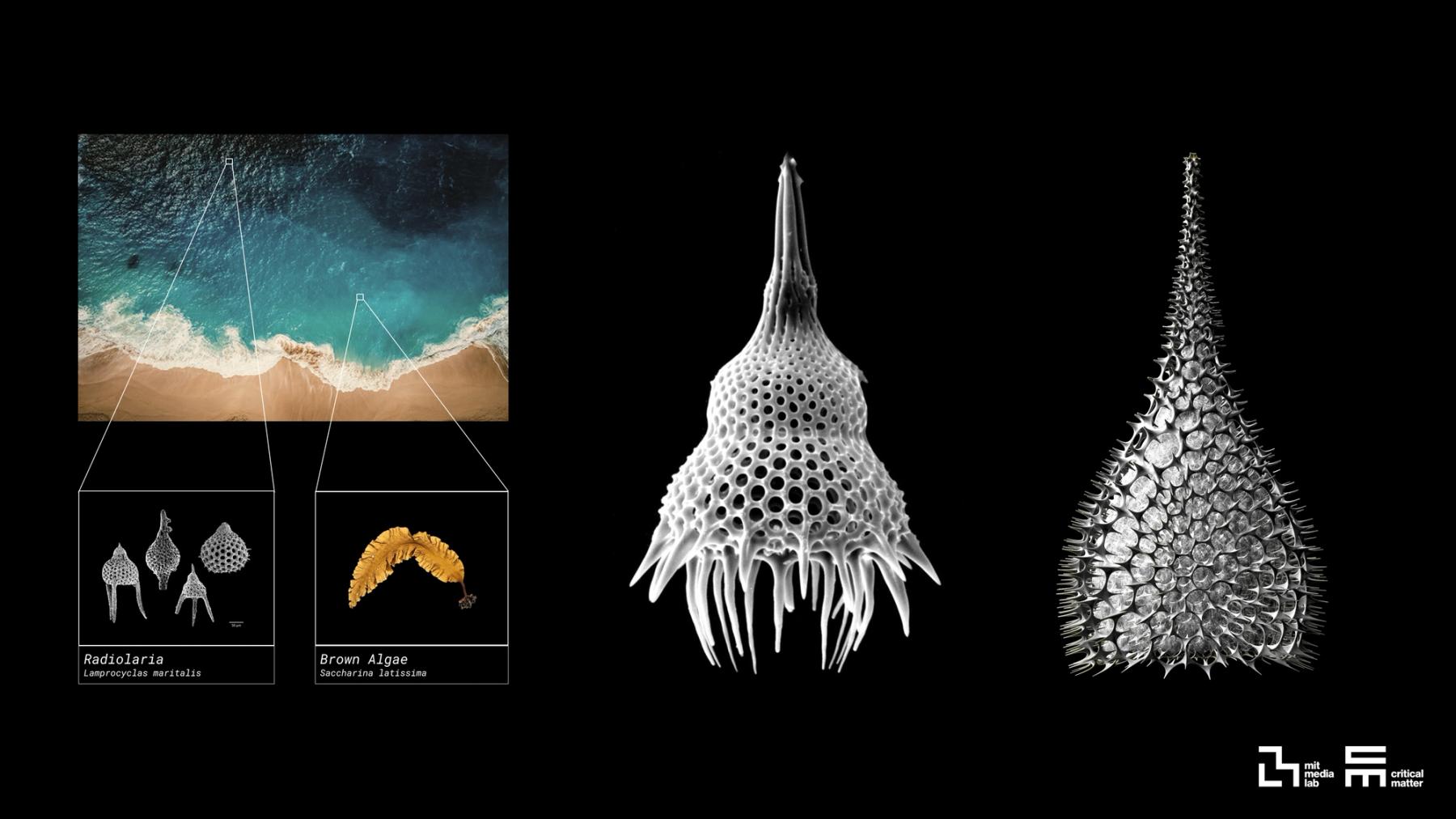
The project draws inspiration from radiolaria, microscopic marine organisms whose intricate porous skeletons optimize exchange with their surroundings. Inspired by their structural principles, we develop lightweight architecture that maximizes filtration while minimizing material use.
Presented as an immersive installation, the project envisions architecture not as a static enclosure but as a living environmental interface that grows over time. It demonstrates how renewable marine biomass, advanced fabrication, and biologically inspired design can converge to create adaptive systems that filter, regenerate, and respond to changing environmental conditions.
By transforming ecological waste into functional material systems, the project proposes a future in which architecture becomes an active participant in environmental restoration. It asks how buildings might be grown from renewable biological resources and designed to continuously exchange with, support, and regenerate the ecosystems they inhabit.