REEF
Second Wind for Retired Sailcloth
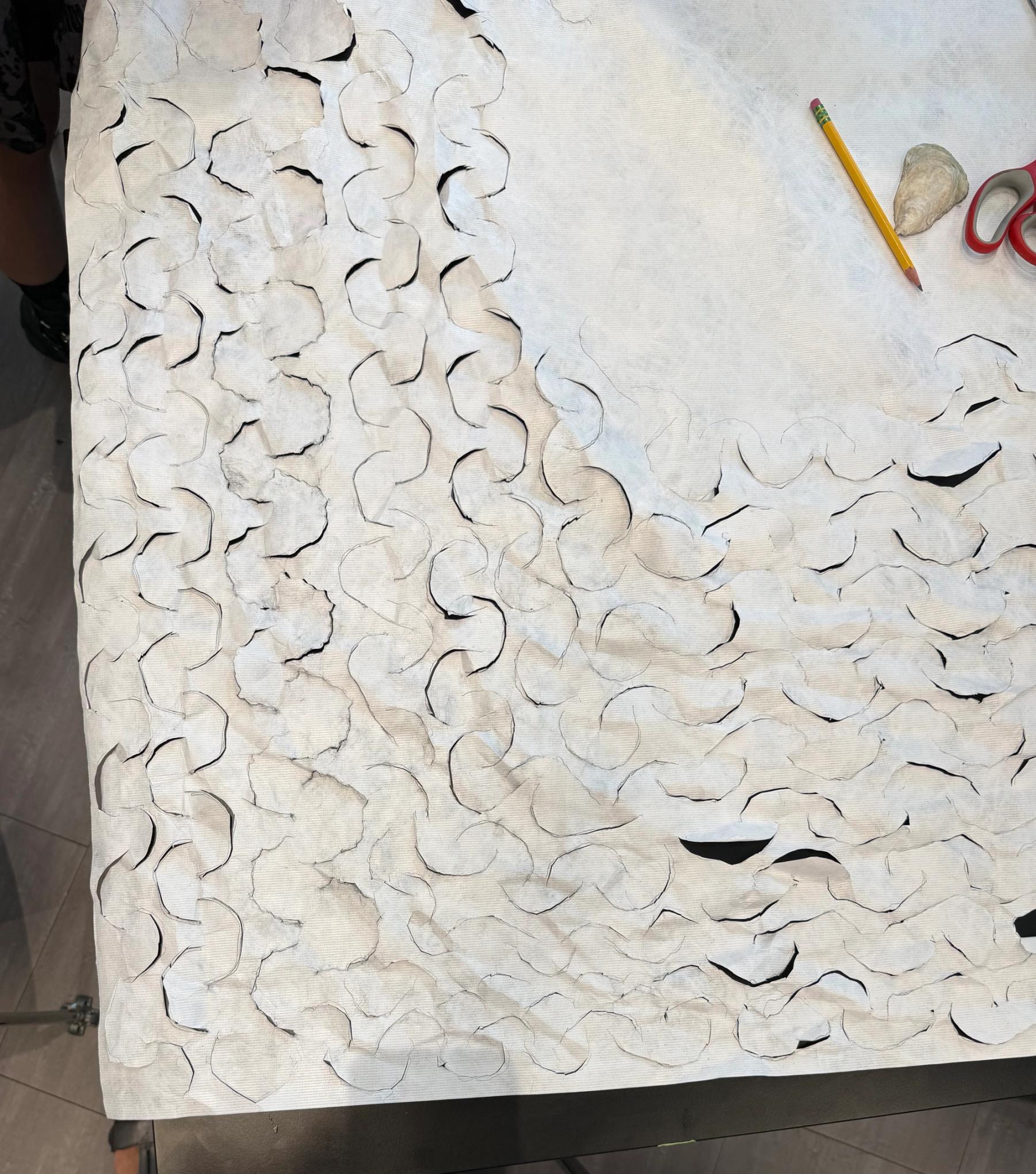
REEF transforms retired New England sailcloth through collective hand-cutting into porous textiles that can become cloaks, canopies, and performance structures. Participants trace oyster shells directly onto a shared surface, creating a pattern that no one fully designs and no machine could reproduce in exactly the same way. As people work from the edges toward the center, they encounter and continue one another’s decisions. The project tests whether technical inefficiency can enable social efficacy, using artistic making as a method to investigate how discarded materials, shared labor, ecological attention, and new forms of value can be recomposed together.
- Project Lead
Azra Akšamija, MIT
- Research Team
Future Heritage Lab:
Merve Akdogan
Kailin Jones
Lillian Kology
Penelope Phylactopoulos
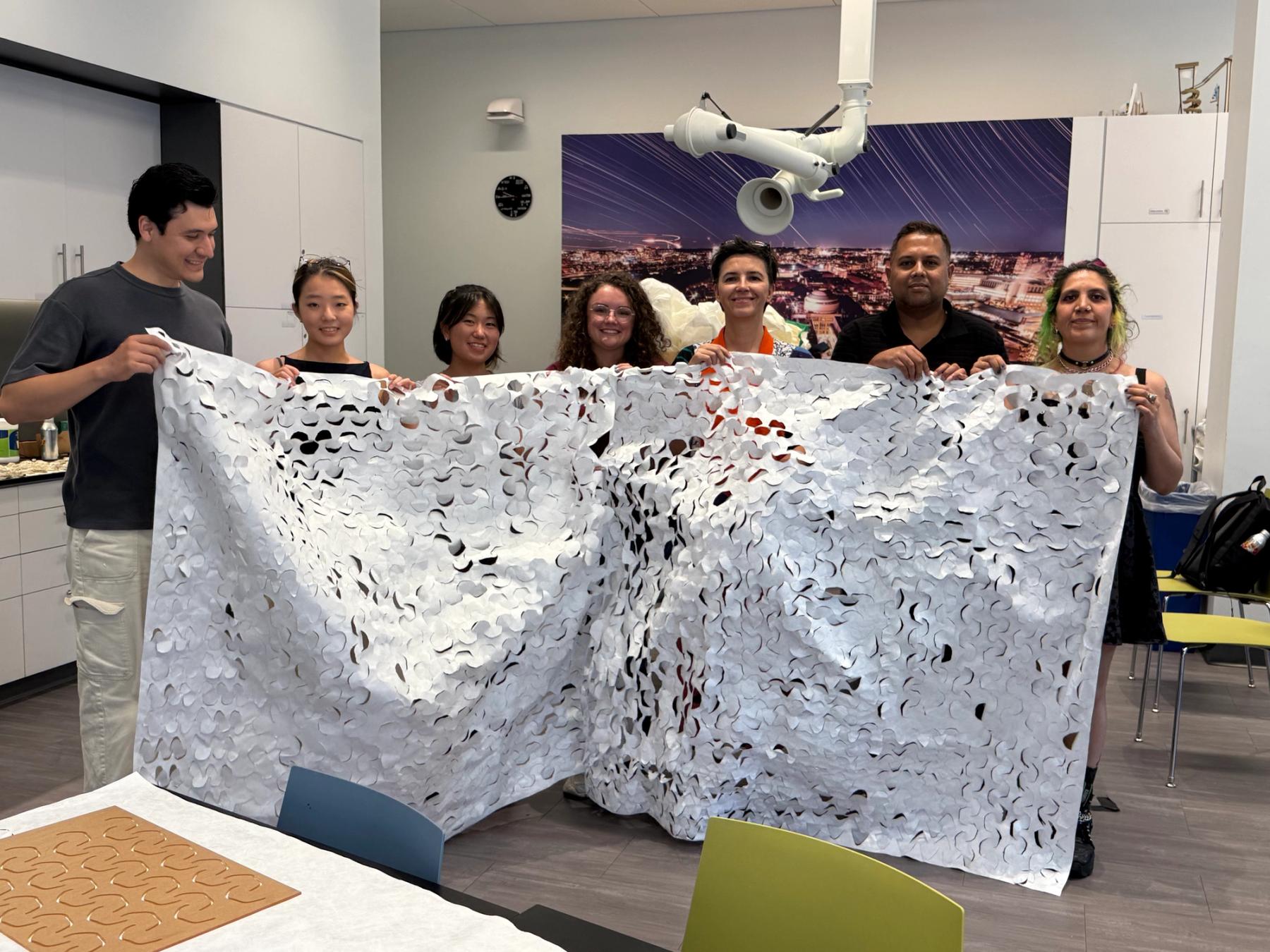
Oyster Lace Creators (MIT Museum Workshop “Time of Layers and Textures”):
Mariana Arcaya & family
Joseph and Lissa Ferreira
Ya Gao
Ikra Iftekhar
Nayeon Kim
Jonathan Lira
Diana Pareja
Josie Stiver
- Research Areas
Textiles
Material Reuse
Coastal Ecologies
Collective Making
Creative Economies
Artistic Research
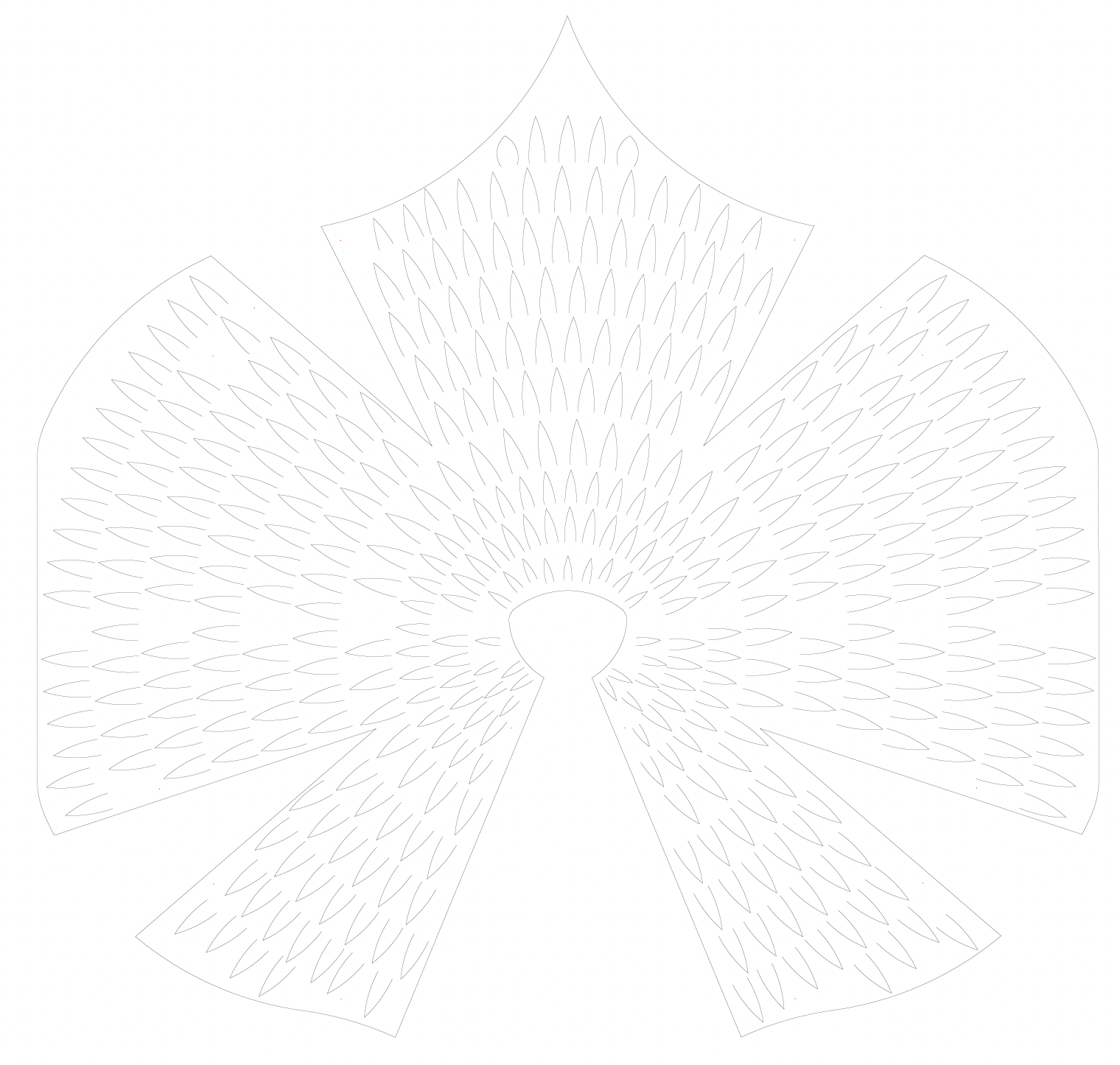
REEF begins when a sail reaches the end of its life on the water. Retired sailcloth from New England’s maritime industries is laid across shared tables and transformed through a simple rule: place an oyster shell on the cloth, trace it, and cut the shape away. Because every shell differs and every participant makes different decisions about placement, angle, precision, and continuation, the pattern remains open and cannot be predetermined.
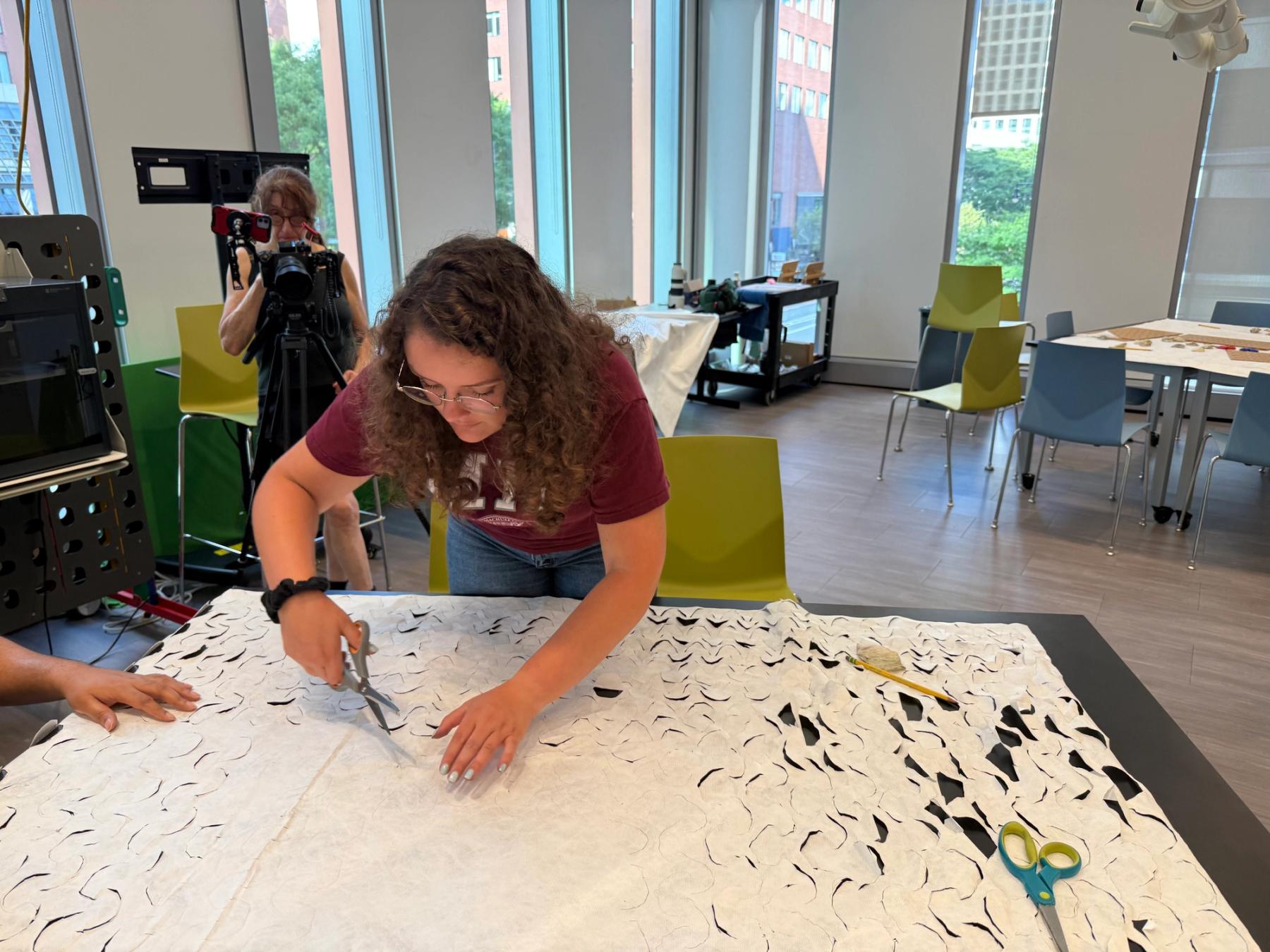
Cutting changes both the material and the social conditions of making. The sail becomes porous to wind, air, light, and shadow and can take on new forms, from a body-scale cloak to a suspended canopy for shade and gathering. At the same time, participants work from different edges of one shared surface toward the center. In an initial MIT Museum workshop, this process required people to encounter, interpret, and continue one another’s work, gradually bringing them physically closer together.
REEF calls this formation a social reef: many small acts accumulating into a shared structure that no participant designed alone. The project tests a making methodology built from an incomplete rule, slow handwork, material resistance, distributed authorship, and the obligation to continue what someone else has begun. Its working hypothesis is that technical inefficiency can, in collective settings, enable social efficacy.
Rather than treating upcycling as an endpoint, REEF asks what new ecological and economic relations can form around discarded material. The transformed cloth may become shading, clothing, social fabric sculpture, or an artistic performance, including its connection to Living Bucentaur procession. The cloth records the decisions made; the protocol makes those decisions shareable. Artistic making becomes a method for discovering what materials, people, and practices become capable of doing together.
Related Projects & Events
Time of Layers and Textures: Slow-Making as a Collective Practice. Collective lace-cutting workshop at the MIT Museum, 8 August 2026, where the oyster-tracing method and the shared-surface protocol were first tested.
Living Bucentaur. The procession and collective making project through which the retired sails were gathered and the first wearable prototypes developed. SA+P procession to the MET building, 8 September 2026. Public presentation of the cut cloths as procession costumes.