WoodSpray
Sprayable bio-composites
for a post-carbon future
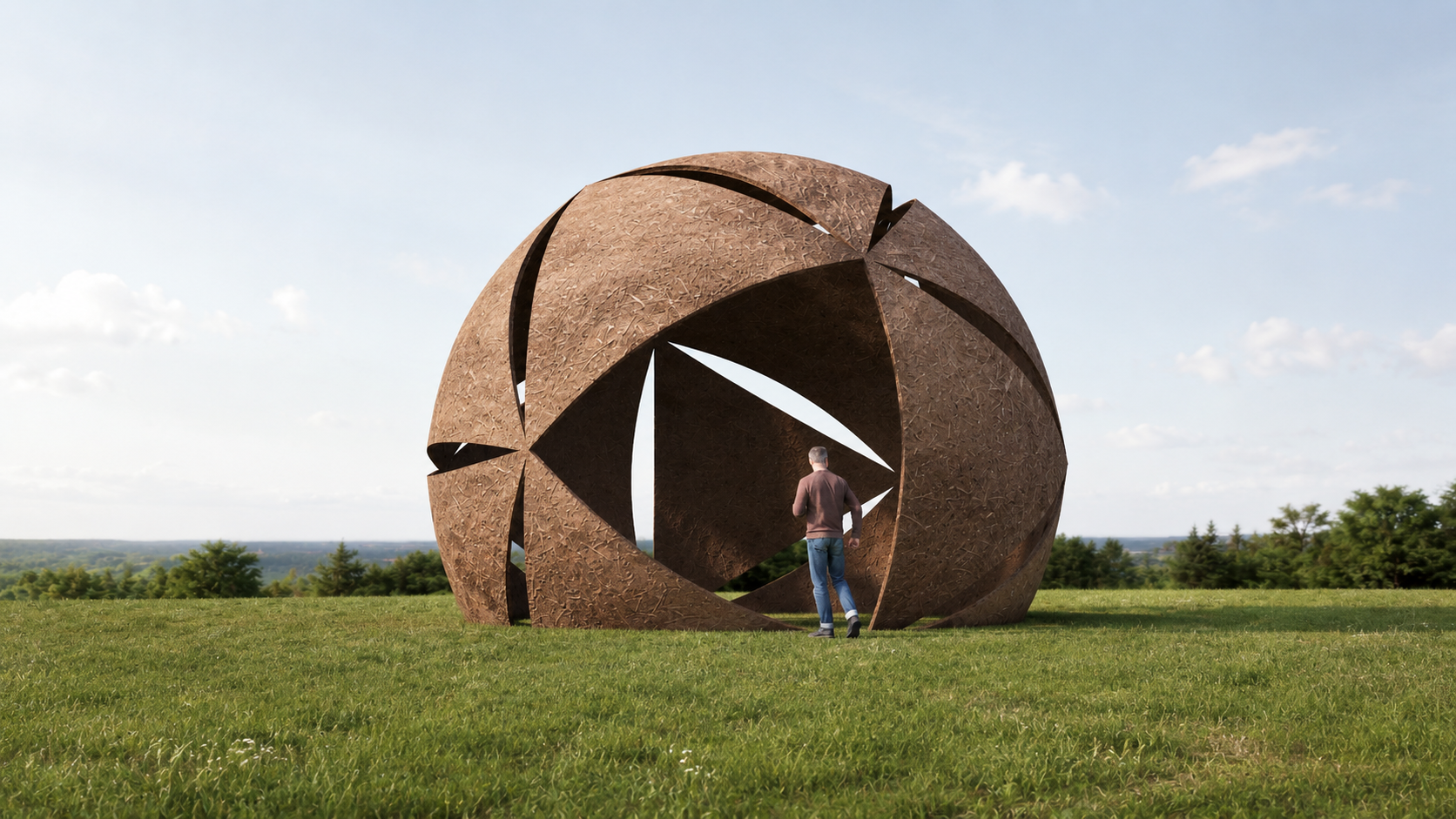

WoodSpray develops a biodegradable construction system derived from wood waste generated through logging and sawmilling. By combining sawdust and other wood byproducts with bio-based binders such as lignin and nanocellulose, the project formulates a sprayable, carbon-storing paste capable of replacing cement and petrochemical composites in architectural applications.
- Project Leads
- Marcelo Coelho, PI, WoodSpray
- Mateo Fernandez, MIT, R
- Skylar Tibbits, PI, WoodSpray
Counterpart: Atelier LUMA
- Research Team
- Research Areas
Advanced Materials
Digital Fabrication
AI-Driven Formulation
Sustainable Construction
The construction industry accounts for 40% of global CO2 emissions and depends on carbon-intensive, formaldehyde-bound composite panels. WoodSpray offers a structurally sound and bio-based material alternative built from three wood-derived ingredients: sawdust, nanocellulose, and lignin. WoodSpray cures at room temperature, is fully biodegradable, and can be tuned by composition to be dense and structural, porous and acoustic, or weather-resistant for outdoor use.
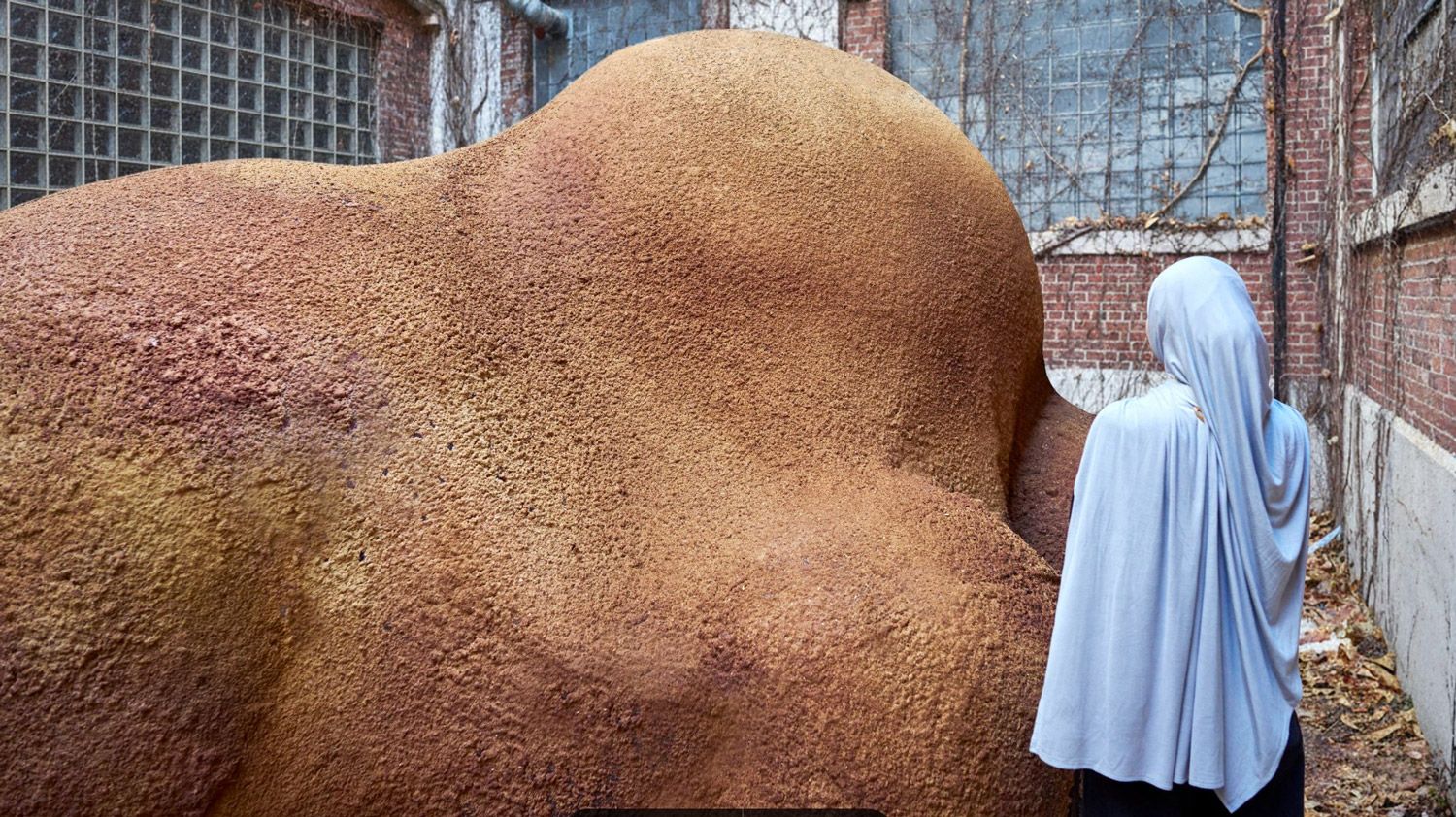
An AI formulation engine, trained on more than 50 documented recipes, can propose new material variants for robotic spray fabrication, so that every application requirement becomes a new, customizable formulation. Prototypes range from small mycelial and moss-inoculated surfaces to a multi-meter architectural pavilion sprayed outdoors on the MIT campus.
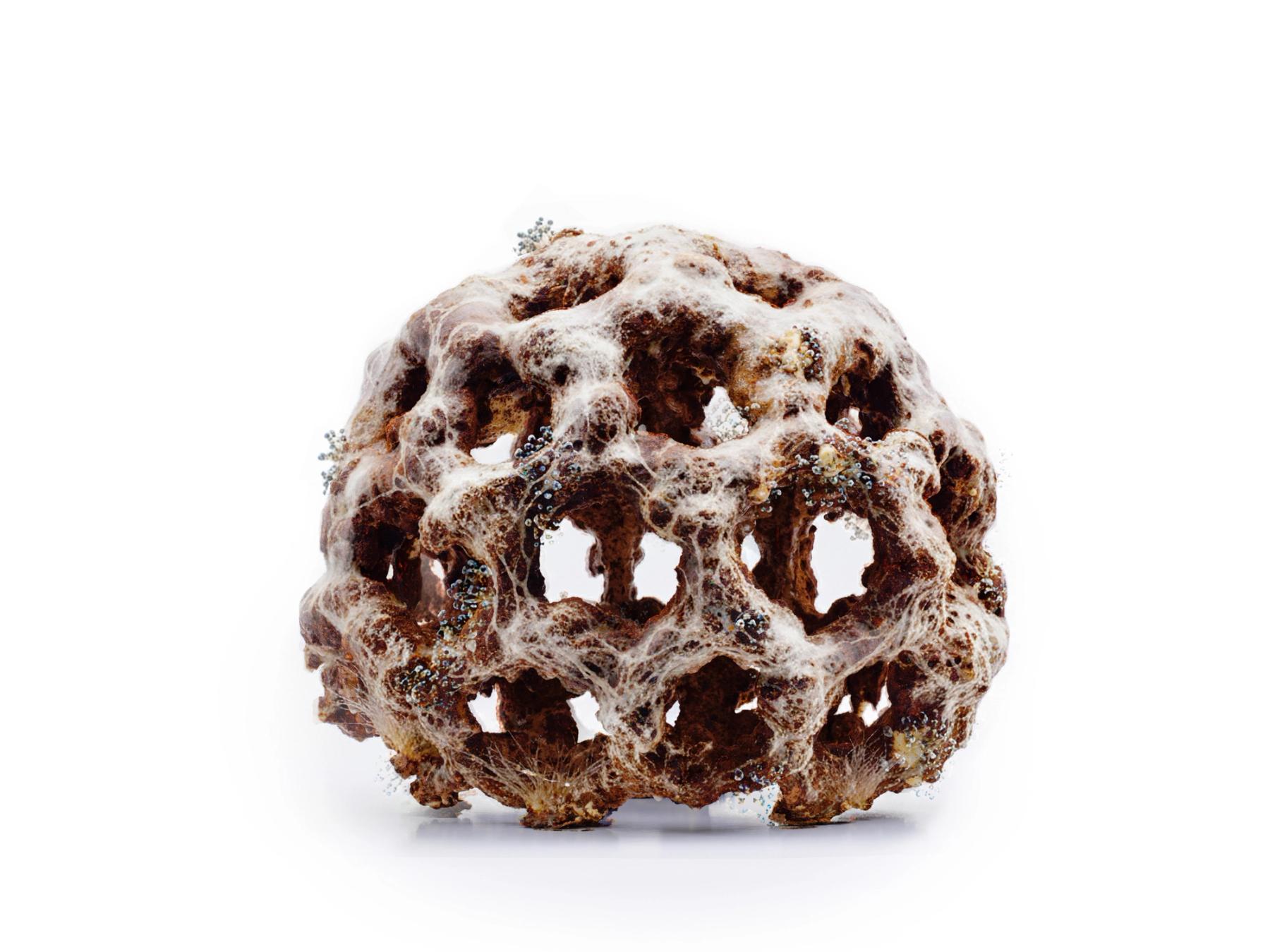
The biophilic prototypes investigate whether construction materials can host living systems that continue to develop after installation, blurring the line between fabricated structure and biological substrate.
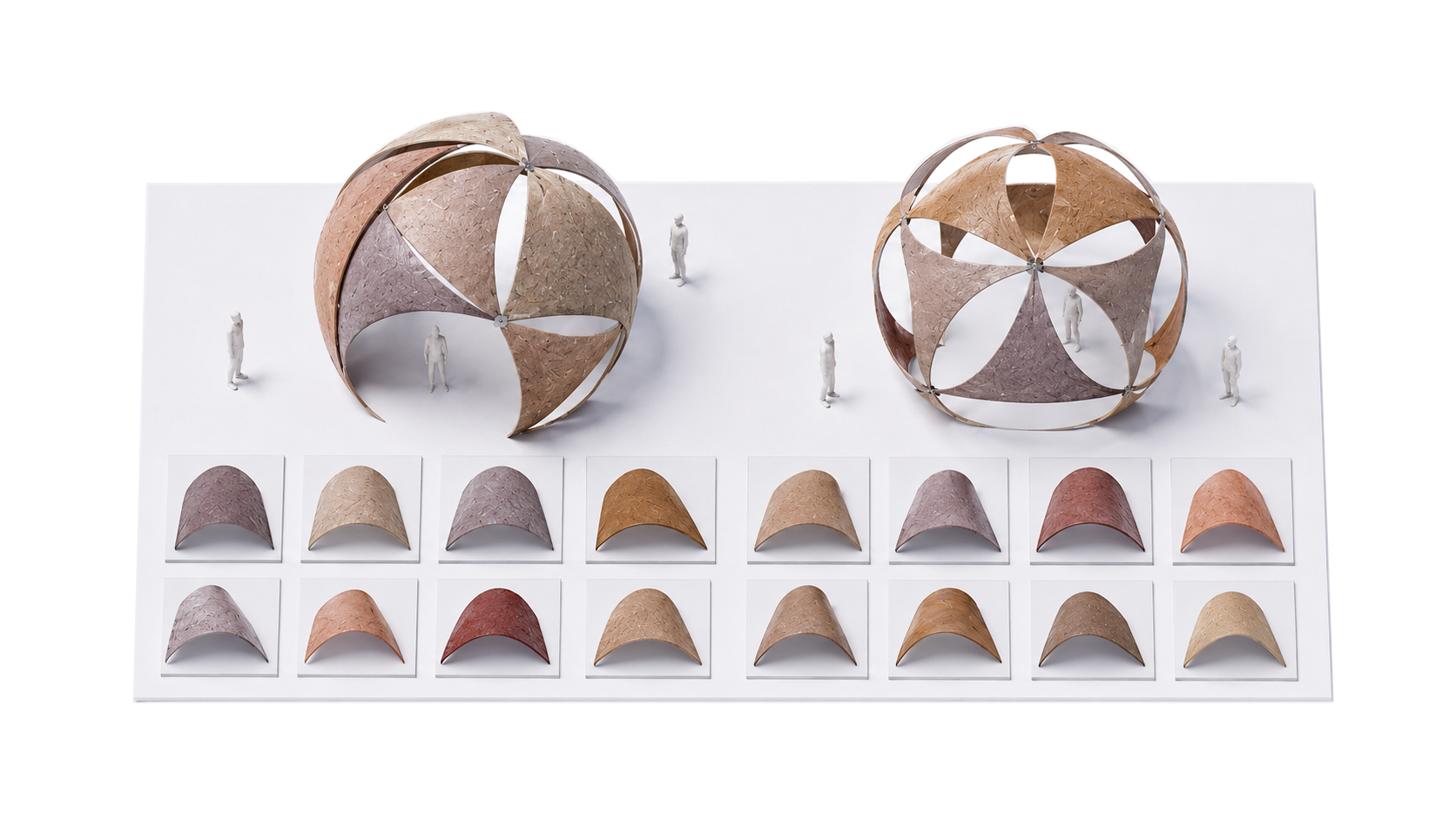
Ongoing collaboration with Atelier LUMA in Arles extends the platform beyond wood waste to Mediterranean agricultural byproducts, including olive pomace, Baccharis wood at different granulometries, sunflower stem, rice husk, and rosemary residues from Naturex antioxidant extraction. Each feedstock behaves differently under spray deposition; current experiments investigate how texture affects acoustic performance, how the material holds curvature without reinforcement, and how surface finish can be tuned by particle-size distribution and formulation ratio. In parallel, work with alternative formwork substrates such as jute burlap and cotton canvas explores fabric-supported casting for lightweight forms. Broader research directions include chemistry-to-performance modeling, functionally graded compositions varying continuously across a single part, and interactions between spray deposition parameters and long-term material behavior.